











































































































































Software
Development Models
For over 27 years, Elinext has been providing outsourcing software development services to companies of different sizes and pursuing different goals, but all gathered by the desire to strengthen their presence on the market with the help of technology. Our extensive expertise in outsourcing, backed by hundreds of successful projects, makes us confident in our belief that each of our clients deserves a solution that is not just tailored to business objectives but also completely fits into time & budget capabilities and expectations.
For over 27 years, Elinext has been providing outsourcing software development services to companies of different sizes and pursuing different goals, but all gathered by the desire to strengthen their presence on the market with the help of technology. Our extensive expertise in outsourcing, backed by hundreds of successful projects, makes us confident in our belief that each of our clients deserves a solution that is not just tailored to business objectives but also completely fits into time & budget capabilities and expectations.
Trusted software development partner with decades of expertise.
A global team of skilled engineers across diverse technologies.
Expertise spanning dozens of industries and business sectors.
Hundreds of completed projects delivered to clients worldwide.
Experienced PMs ensure smooth delivery and transparent processes.
International presence enabling efficient distributed development.











Engagement Models
Quality Management









Software Development
Methodologies


Our Process


This is the entry point to the engagement. The client reaches out through a website form, direct email, referral, or business development channel.
This inquiry typically includes:
- A high-level product description (e.g., “we need a mobile app for managing logistics”)
- Desired platforms (web, Android, iOS)
- Budget range
- Desired go-live date or event deadline
- Attachments (PPTs, Word specs, wireframes, or RFP document)
An introductory meeting between the client stakeholders (Product Manager, CTO, etc.) and Elinext sales team, possibly including a delivery manager or tech lead.
- Understand the problem to solve
- Clarify target users and business context
- Identify unknowns and dependencies
- Client’s business context and objectives
- Budget expectations and target deadlines
- Level of clarity in technical requirements
- Preferred tech stack (if any)
- Past vendors/solutions and challenges faced
- Preliminary tech fit assessment
- Agreement on whether a Time & Materials or a Fixed Price model is suitable
- Notes to guide estimation and team composition

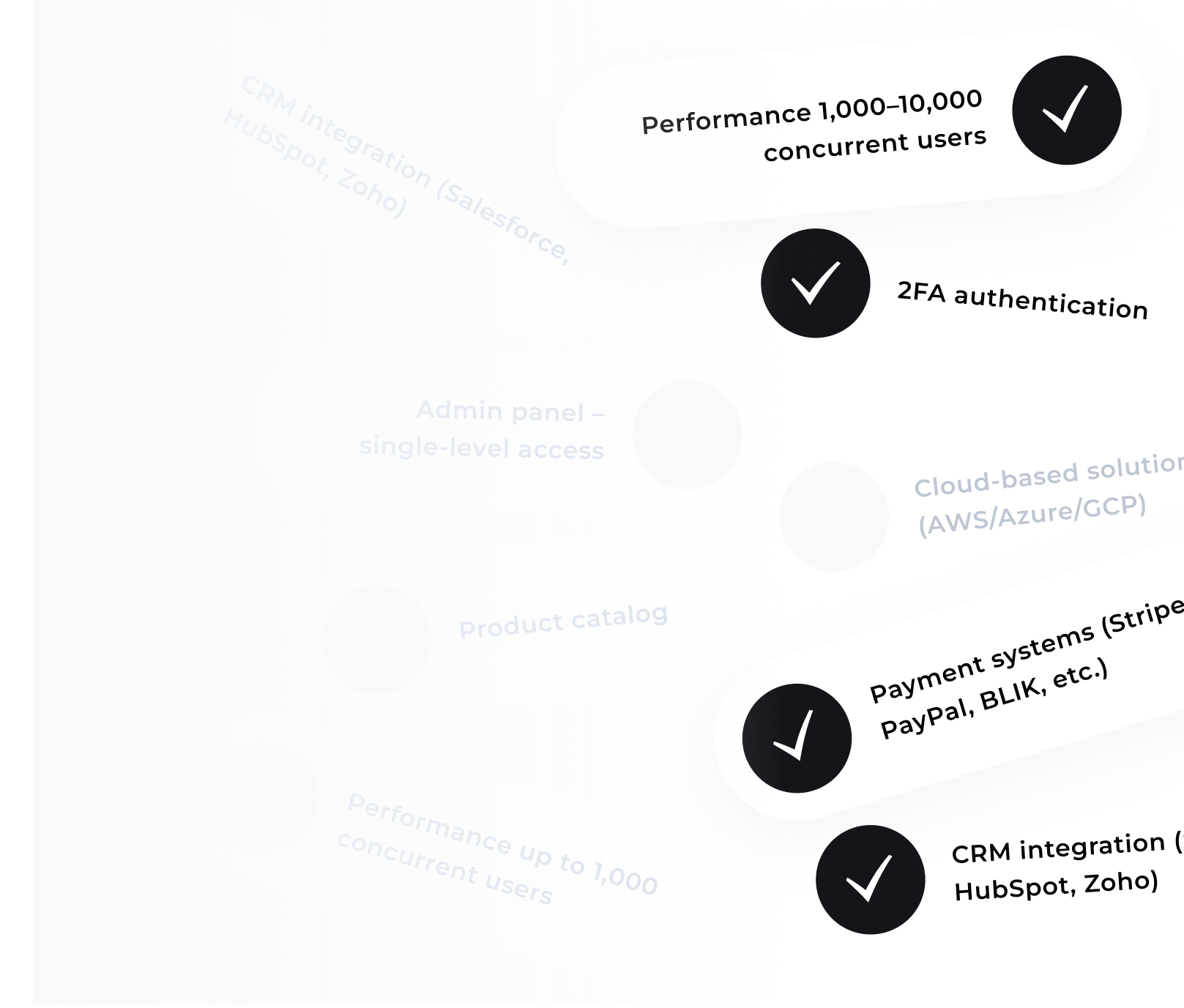
This stage typically spans multiple workshops over 5 busienss days on everage. Pre-sales business analysts (BAs) and technical architects engage the client to collect initial requirements. The goal is not to fully define scope but to gather enough to build a rough roadmap and quote.
- Identify core user flows and system components
- Define key objectives (e.g., build MVP, modernize legacy)
- Extract non-functional requirements (security, performance, etc.)
- Evaluate 3rd-party systems or APIs (if any)
- Draft simple diagrams, personas, or mockups
- A basic scope document or opportunity brief used to estimate work
- A clickable prototype with basic functionality to see if Elinext Presales team is on the same page with the client
This is the formal commercial offer to the client
- Total price (e.g., $92,000)
- Timeline with key milestones
(e.g., Alpha in 6 weeks, Final in 14 weeks) - Team composition (e.g., 1 PM, 2 devs, 1 QA, 1 UI/UX)
- Assumptions, constraints, and dependencies
- Payment schedule (e.g., 30% upfront, 40% after UAT)
- Validity period (15 days)
- Scope extensions
- Support and maintenance services
- Licensing for libraries or cloud costs
After proposal approval, the client and Elinext finalize:
- Master Service Agreement (MSA) – general legal and business terms that usualy cover IP ownership, liability, confidentiality, jurisdiction, termination and renewal clauses.
- Statement of Work (SoW) –
- High-level scope
- Hourly rates
- Billing terms
- Invoicing and time-tracking practices
Optional retainer: If the client wants a fixed monthly spend with capped hours
The T&M contract does not freeze scope—it defines the process and transparency of delivery.
- Project scope
- Deliverables and acceptance criteria
- Milestones and payment schedule
- Delivery mode and cooperation model

- Assign dedicated resources (Dev, QA, PM, BA)
- Create or share access to tools
(Jira, Confluence, GitHub, Slack) - Hold a kick-off meeting with client and team
- Introductions
- Review of project objectives and deliverables
- Initial roadmap and alignment on next steps

- Each sprint maps to a planned feature/module
- Progress tracked via Jira/ClickUp
- Developers implement per approved designs and Definition of Done
- Client may have visibility via dashboards
- CR documentation
- Impact analysis (time, cost, quality)
- Client sign-off
- Adjustment of timeline and pricing
- Signed by both parties before implementation
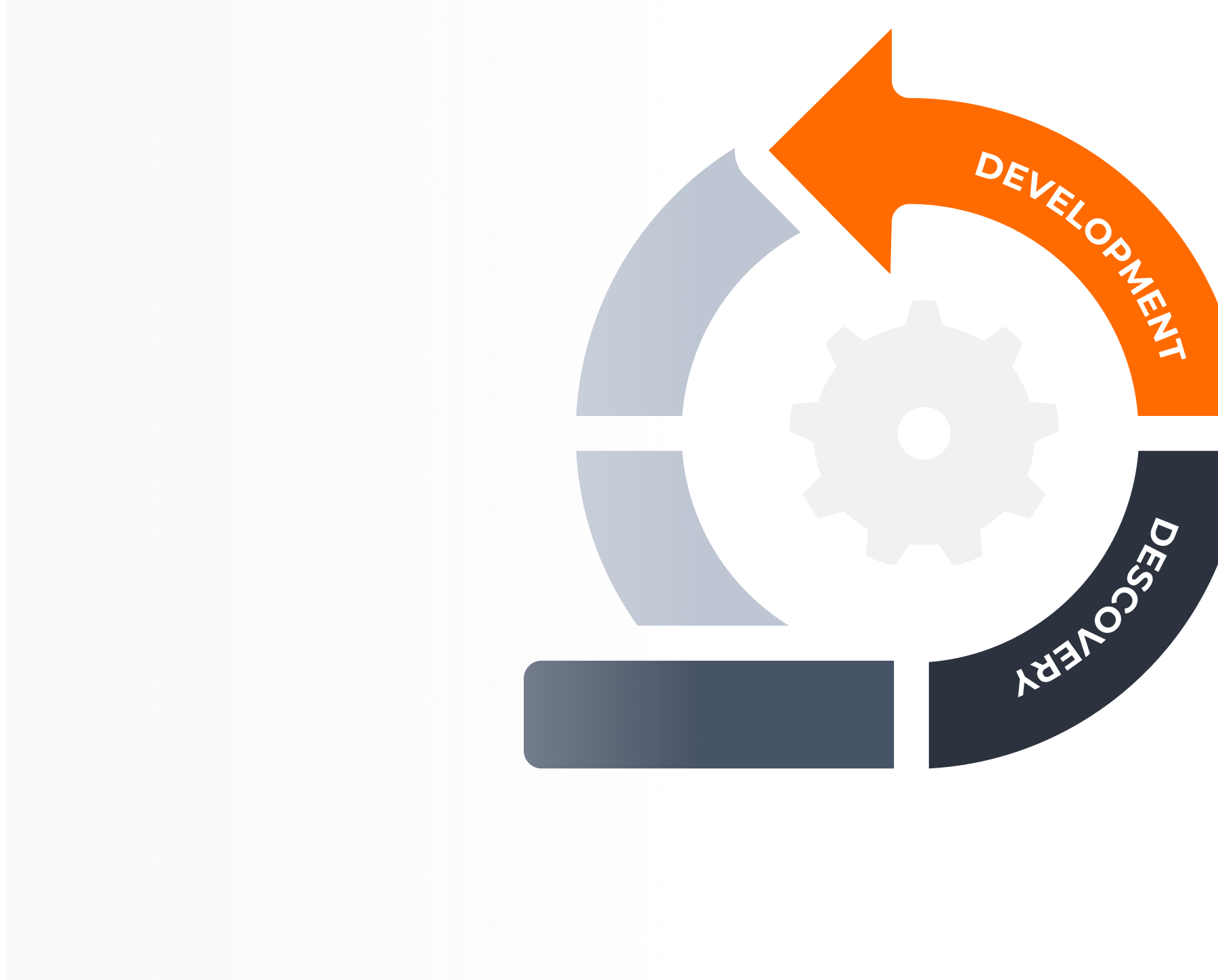
Unlike fixed-price, this step is ongoing and collaborative.
The team works closely with the client to:
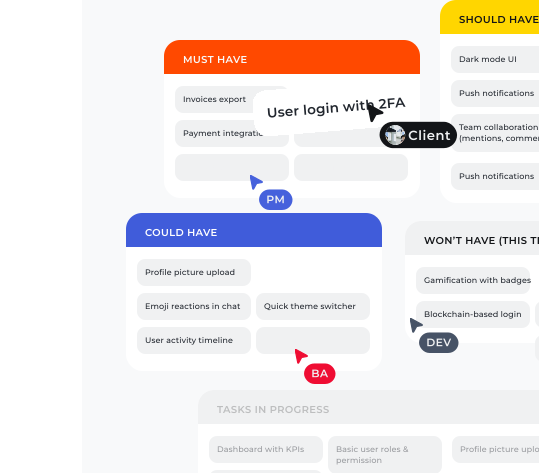
- Convert high-level ideas into actionable epics and user stories
- Prioritize features using MoSCoW or business value ranking
- Add acceptance criteria to each story
- Define the Definition of Done (DoD)
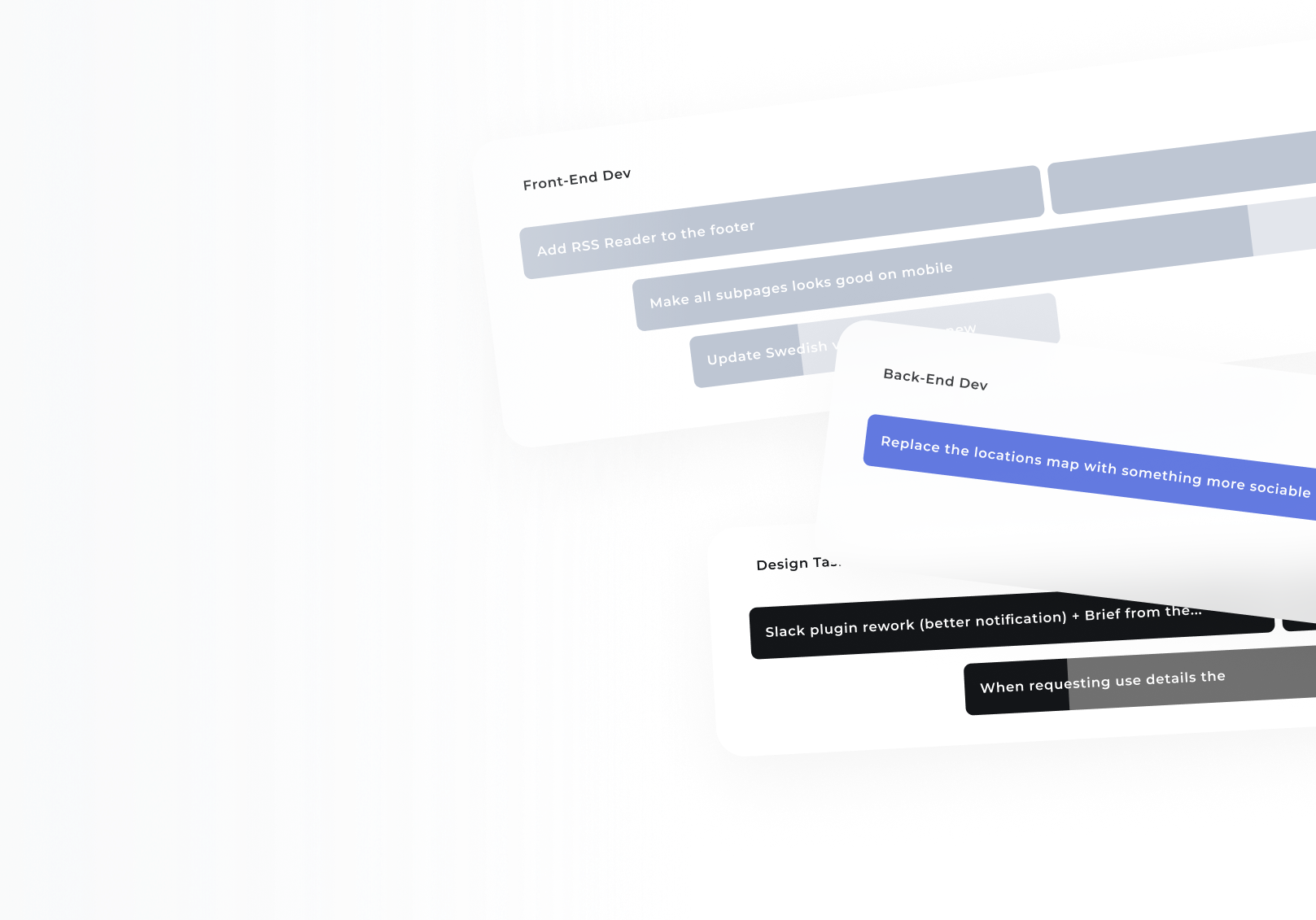
A dedicated QA team validates the product against pre-defined test cases to ensure overall quality and stability:
- Manual and automated testing
- Regression and integration testing
- Cross-platform/device testing (if applicable)
- Functional correctness
- Browser/device compatibility
- API validation
- Bugs are logged, triaged, and resolved before release
Entry/Exit criteria for each build strictly followed. The product must meet internal QA sign-off before moving to UAT.

- Team reviews the prioritized backlog
- Selects stories to work on based on velocity
- Clarifies scope and tasks
- Daily standups to track progress
- Mid-sprint refinement if needed
- Developers and QA work in parallel
- Demo of completed stories to client
- Discuss what went well, blockers, and improvements for the next sprint
The client performs structured testing in a UAT environment:
- Client checks against the agreed requirements
- Bugs or deviations are reported
- All “blocking” issues are resolved before final delivery
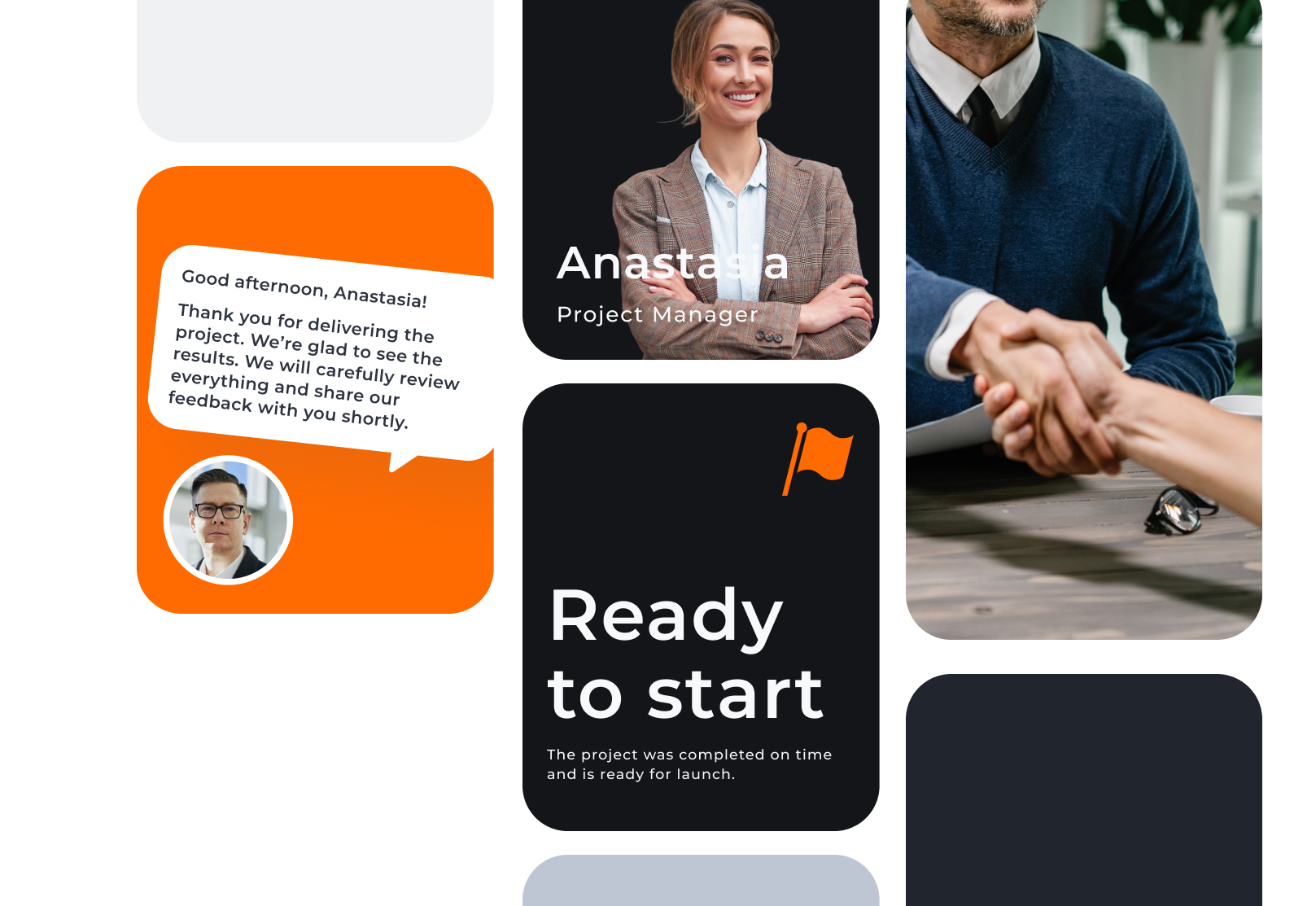
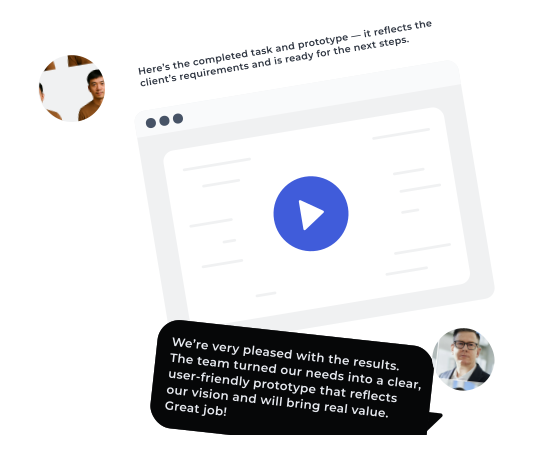
Every 1-2 weeks, usually at the end of each sprint or milestone, the team presents progress to stakeholders.
- Feature walk-throughs
- Backend integration showcases
- Design previews
- Transparent communication
- Early validation and immediate adjustments
- Stories reprioritized or re-scoped
- Opportunity for course correction
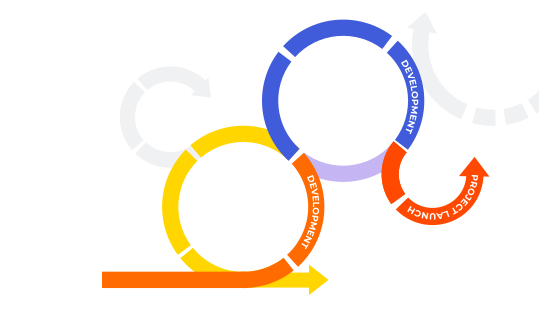
As understanding of the domain grows or market conditions change, the client may:
- Add/remove/modify features
- Request changes in team size or focus
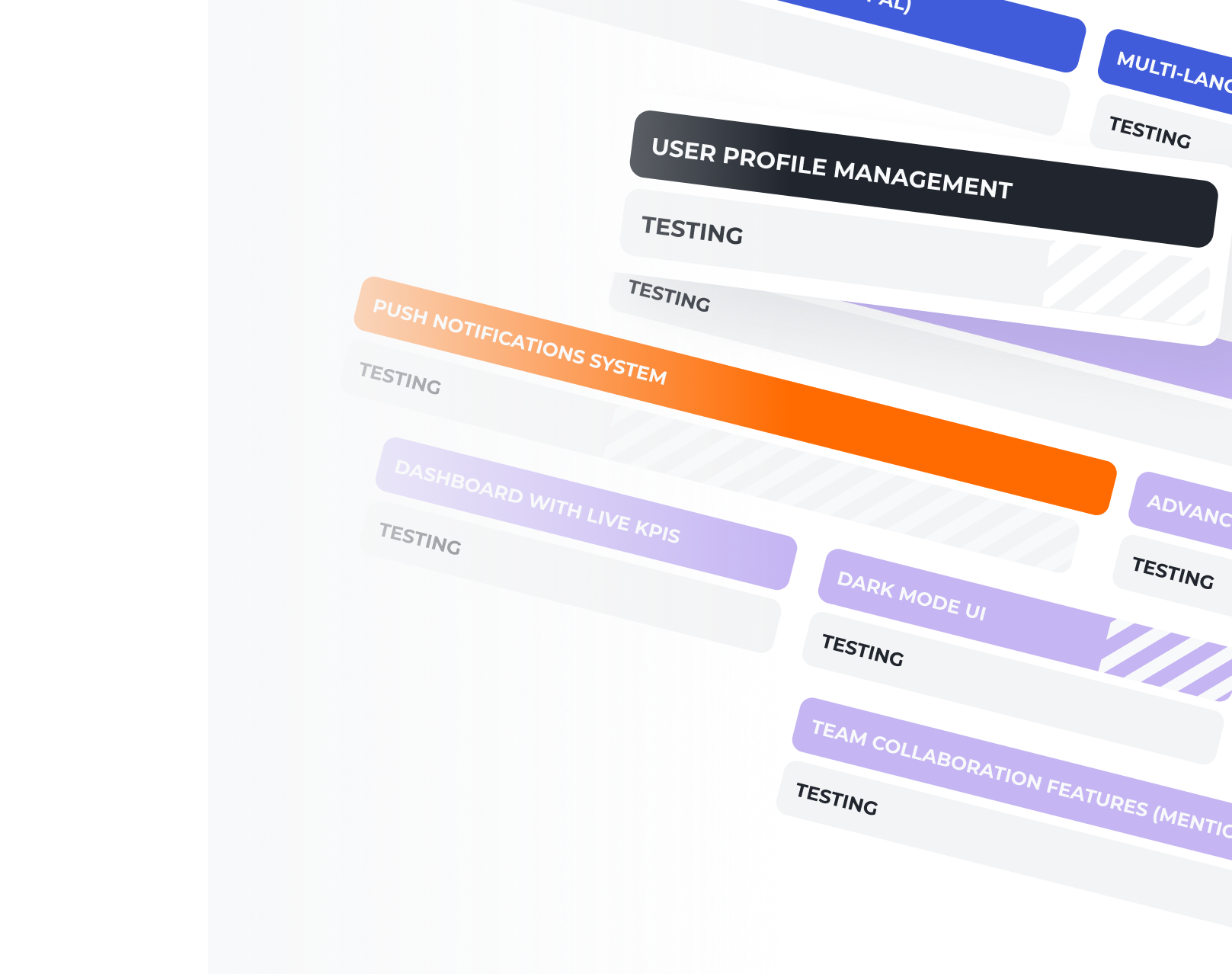
Quality is ensured continuously, not just at the end. Continuous QA & UAT are performed in parallel.
- Developers write unit tests
- QAs perform manual and automated testing
- Bugs are tracked and resolved within sprint or next cycle
- UAT (User Acceptance Testing) environments are made available for the client
- Client tests features on staging or demo environments
- Feedback fed into next sprint
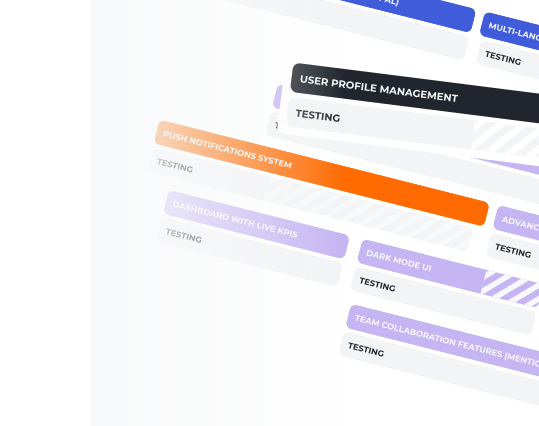
In long-term T&M projects, partial delivery happens regularly. Client may receive working
increments of the solution at key points:
- MVP version
- Admin-only panel
- Integration-ready build
- Client can begin testing, pilot with users, or seek investment
- Facilitates phased go-live or parallel integration
The relationship doesn’t have to end.
- Retrospective with both teams
- Lessons learned
- Discussion on velocity, budget consumption, process gaps
- On-demand or monthly retainer
- Bug fixes, monitoring, small enhancements
- Option to keep the team for ongoing product improvements or scaling
- Covers only defect resolution (i.e., fixing bugs related to features agreed in the SoW)
- No new features or change requests are handled during this phase
- Typically handled by a lean support team
- Escalations are routed to the original delivery team for continuity and faster debugging
- Issue reports are tracked with complete logs and context
- Root cause analysis may be provided for major defects

Why Our Clients Choose Elinext















FAQ
-
Elinext offers three engagement models. With IT staff augmentation, developers and other specialists join your existing team. A dedicated team gives you a full-time team focused exclusively on your project. With software outsourcing, Elinext takes care of the entire development process, from planning and design to delivery and support. The right model depends on how much control you want to keep over the project.
-
A fixed price contract works best when your project scope is clear from the start. You’ll have a predefined budget, predictable delivery, and a 60-day warranty period for fixing defects after launch.
Time & materials is a better fit if your requirements are likely to evolve or you’re working in an Agile environment. You pay for the actual time spent, making it easier to adjust priorities as the project progresses, though the final cost is less predictable.
-
Every project begins with a presales phase, a 2–3 day assessment carried out by a business analyst, technical expert, UX/UI designer, and project manager. It includes an initial effort estimate, recommended technology stack, and a high-level product backlog, with around 60% estimation accuracy.
For more complex projects, you can also choose a discovery phase, which usually takes 2–3 weeks. It provides a detailed project scope, system architecture, development roadmap, and a much more accurate estimate, typically around 90%.
-
Most projects begin with a 2–3 day presales phase. If a discovery phase is needed, it usually adds another 2–3 weeks. In many cases, development can start within a month of the initial conversation. Simpler projects with well-defined requirements can move directly from presales to development.
-